
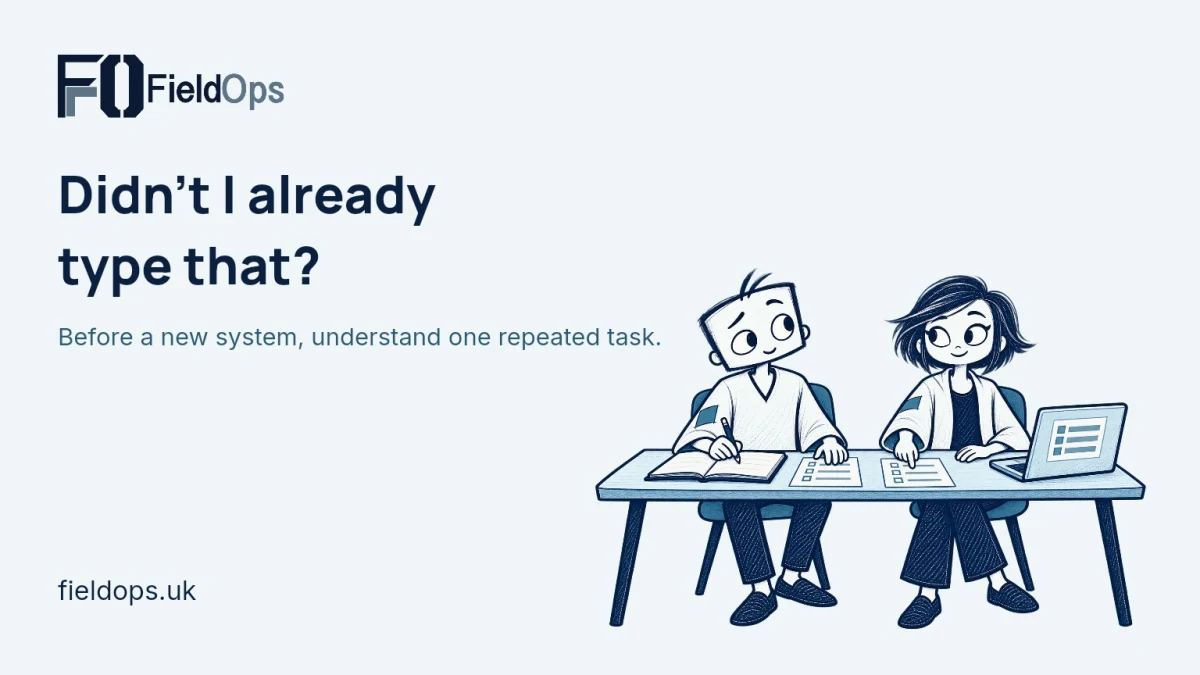
A notebook. A list. Another list. The same job details, copied again.
In our illustrated studio story, a colleague watches the second round of typing.
“That job looks familiar.”
“It should. I’ve introduced it to three different places.”
“Do all three need it?”
The pencil pauses. “Now that’s a better question.”
The useful beginning is that pause. Before choosing a new app or asking for automation, understand what the repeated task is doing for the business.
Pick one familiar task
Look for a small routine that makes you think, “Not this again.” It might be copying the same information between lists, checking a status manually or repeatedly looking up an answer.
Choose one example you can explain plainly. What starts the task? What do you do? Who needs the result? Where does the information go?
Write the steps on a piece of paper. You do not need a finished technical plan to describe the work.
Ask what each copy is for
Repeated information is not automatically waste. A second record may support a check, a handover or a responsibility someone genuinely needs.
Before removing it, ask the person who uses it. Is it doing a different job from the first record? Is there a reason they cannot use the original? What needs to stay correct?
A tidy-looking shortcut that removes a useful check can make the work harder. The aim is to understand the routine, including the parts worth keeping.
Choose the smallest useful change
Sometimes the first improvement is a clearer process, a better template or a shared place to find the current information. Sometimes a small website, app or workflow change is worth exploring.
If software is involved, agree what it should do and how you will check it. Try one complete example, including any exceptions and the person who uses the result. Connections between systems need their own scope and checks; we should not assume that every tool can be connected or that automation is always the answer.
Do not attach a time-saving figure before you have measured the actual routine. A small, tested improvement is something you can assess. A grand promise is not evidence.
What makes you think “Not this again”?
Tell us about the task, not your customers’ details. A simple description is enough to start: what repeats, who needs the result and what must remain correct.
At FieldOps Studio, we listen to the job first and help shape a useful first version. Our websites, practical apps and workflow discussions start with the agreed need, with scope, price, timing and responsibilities made clear before work.
Start a conversation. Sometimes the first improvement does not need new software.