
Most taxi customers are in a hurry. They want to know you cover their area, that you are licensed and reliable, and how to book. They are usually on a phone. A taxi website succeeds when it answers those questions quickly and gets the booking to the right person.
This guide covers what to plan, from the pages themselves to the choice between a simple quote form, online booking and a full booking platform.
Show who you are and where you work
A customer choosing a taxi firm they have not used before is looking for reassurance. Make these easy to find:
- Licensing. Name the council that licenses you. It is a simple, checkable trust signal.
- Area and services. The towns you cover, and whether you do airport runs, school contracts, accounts or long-distance work.
- Vehicles. Saloons, estates, people carriers or wheelchair-accessible vehicles, with real photographs where you have them.
- Contact. A phone number that works when tapped, an email address and opening hours, if you are not running around the clock.
Only show reviews that are genuine, and only claims you can back up.
Design for the phone first
Many taxi bookings start on a phone, often outside, sometimes with a weak signal. Keep pages light and the main actions near the top: call, book or request a quote. Make forms short, with large fields and sensible defaults for date and time. Test the whole journey on an ordinary phone, not only on a desktop screen.
Quote form, online booking or a platform?
There are three broad levels, and many firms only need the first.
- A quote or booking request form. The customer sends pickup, destination, date, time, passengers and luggage. Your office replies to confirm. This is simple, cheap to run and keeps you in control of every job. It suits pre-booked and airport work well.
- Online booking with instant confirmation. The customer books and gets a confirmed time and price straight away. This needs clear pricing rules and someone keeping availability accurate. Many firms do this through an existing dispatch system’s booking widget rather than a custom build.
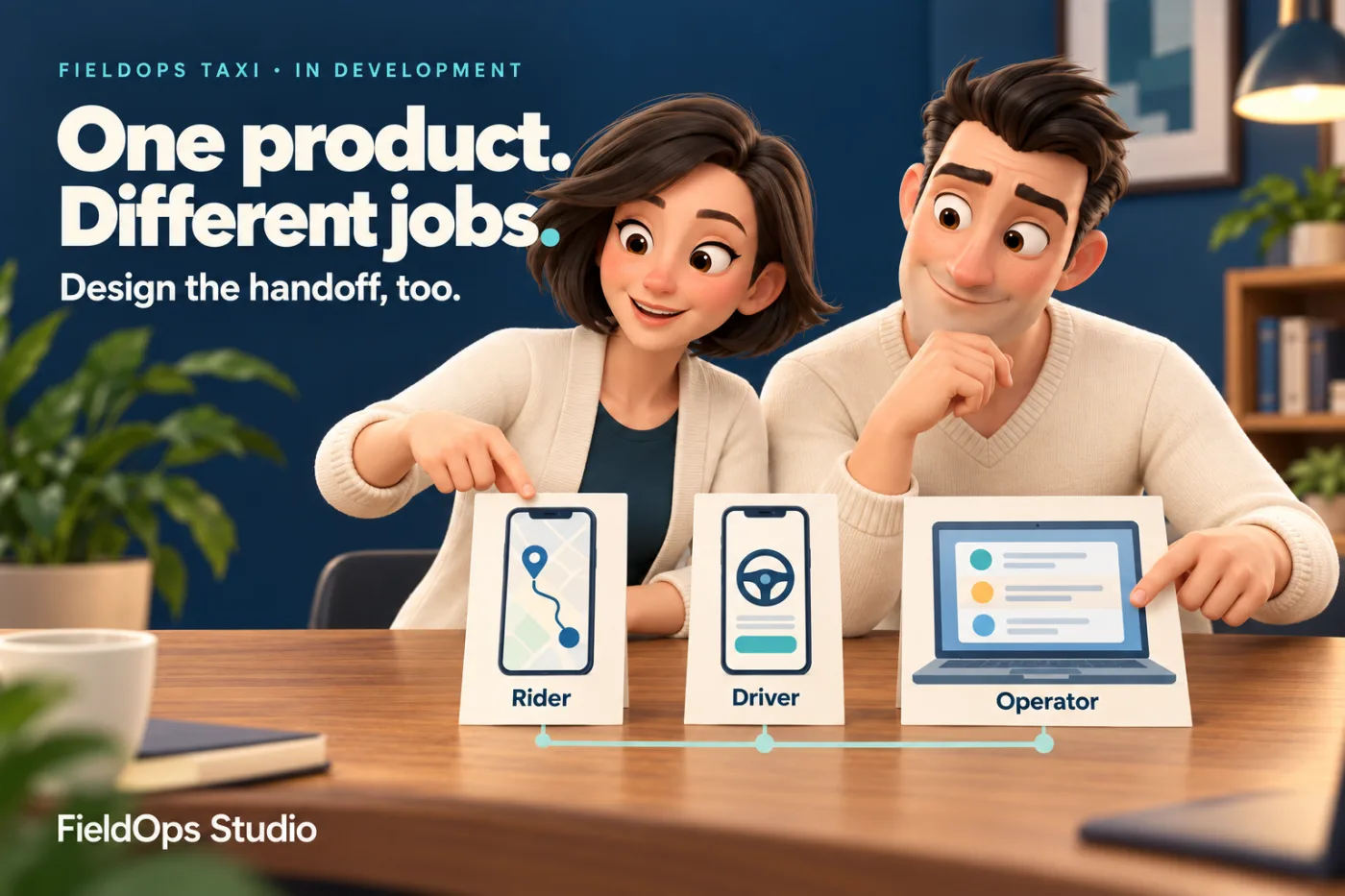
- A connected booking platform. Rider and driver apps and an operator workspace sharing the same booking. This makes sense when the handoff between people is the real problem: who accepts a job, what the driver sees, how the customer is kept informed. It is a much larger project and needs careful planning.
Choose by asking where bookings get stuck today. If it is customers not finding your number, a better website is enough. If it is the office juggling messages between customers and drivers, the workflow behind the website matters more.
Plan who sees whose details
Bookings involve personal details: names, phone numbers, addresses and travel times. Decide early who needs to see what. Does a driver need the customer’s personal phone number, or can the office or the system relay messages? Where is booking information stored, and for how long? Your privacy notice should describe what really happens, and access to booking records should be limited to people who need it.
What we are building, and what it is not
FieldOps Taxi is our own connected booking platform, and it is in development. We are building focused Rider and Driver apps, an Operator workspace and the backend that connects their booking and dispatch work. It is not released, and we are not claiming that any taxi firm uses it. Developing it has taught us a lot about the handoffs between customer, driver and office, and we share those lessons in notes like Design the handoff between roles and Write the promise beside the action. You can follow its progress in the Taxi platform story.
Where to start
For most taxi firms, the right first step is a clear, fast website with a working booking request route, tested on a phone. A booking system can come later if the workflow needs it.
If you would like help with that first step, see our website design service. If the problem is the workflow behind the bookings, see web apps and internal tools. Either way, you can tell us how bookings work today.
Where do customers get stuck in your business?
Tell us what you want to improve. We’ll start with the part that needs to work better.
Start a conversation